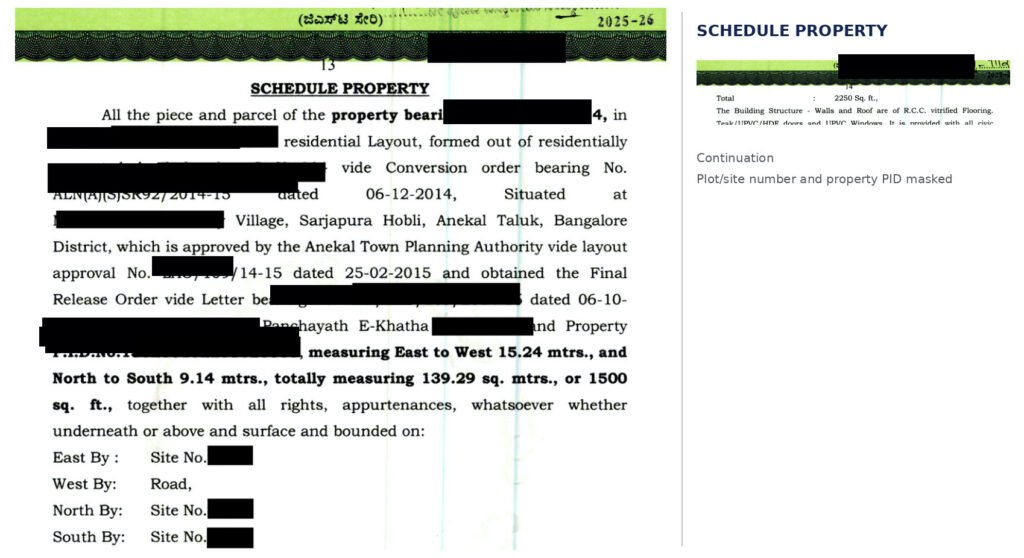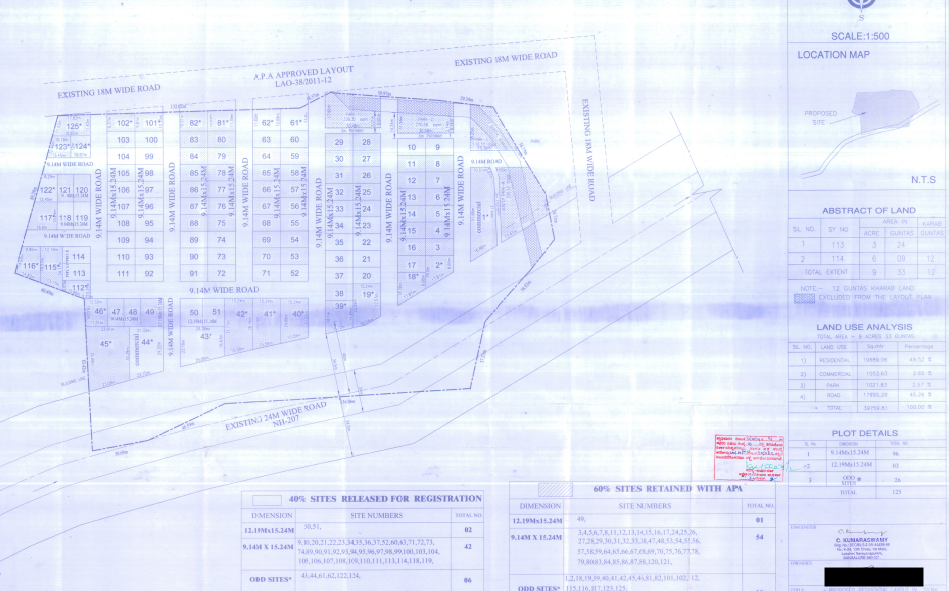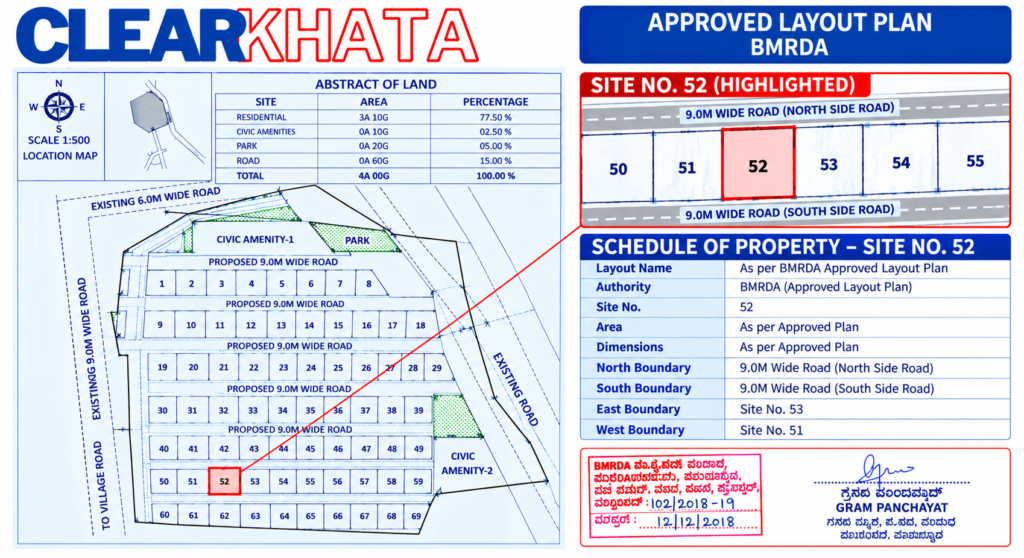

In simple words, the Schedule of Property is the section of your sale deed that tells you exactly which property you are buying.
For a residential plot, it usually describes details such as:
-
Plot number: Your specific plot in the layout.
-
Survey number: The larger piece of land in which the plot is situated.
-
Measurements: The length and width of the plot.
-
Total area: The size of the property you are purchasing.
-
Four boundaries: What lies to the East, West, North and South of your plot.
-
Village and location details: The land’s recorded location and other identifying particulars.
-
PID No: Unique no given to your property which reflects in your Khata certificate.
-
Additional information: Such as Khata no ,Project name,Land conversion order no etc.
Think of it as the property’s identity card. If these details are incorrect, identifying the exact land you purchased can become difficult.
At Clear Khata, we recommend physically inspecting the property to ensure that all the details mentioned in the sale deed match the actual site.
A real court case: When directions and measurements go wrong
In K. P. Ramachandran v. Kalappa, decided by the Karnataka High Court on 25 March 2026, the sale deed contained an error in which the North–South and East–West measurements were interchanged.
The dispute eventually reached the High Court. The Court found that the error was a mutual clerical mistake and ordered rectification of the sale deed (Another registered deed document correcting the original sale deed).
The lesson: Even a mistake that appears to be a simple typing error can require court proceedings to correct.
Five things every first-time plot buyer should check
1. Plot number and survey number
Your plot number identifies your individual plot within a layout. The survey number identifies the larger land parcel. Check both against the relevant property records and approved layout plan.
2. Measurements and total area
If the deed says 30 × 40 feet, check that the dimensions match the intended plot. Do not rely only on the stated area.
3. All four boundaries
Check the East, West, North and South boundaries against the layout plan and other relevant records. Do not assume that a matching plot number alone is enough.
4. The approved layout plan
Confirm that the plot shown to you corresponds to the plot described in the deed and the relevant approval records. A site visit alone cannot establish this.
5. The previous sale deeds and property records
Cross-check the schedule with the seller’s title documents, previous khata certificates, survey documents and applicable land or municipal records. If any detail differs, ask for an explanation and have it resolved before registration.
Now how does the “Schedule of Property” look on a sale deed?
At Clear Khata, we help property buyers understand property documents, spot inconsistencies and identify questions that need further review before they make a decision.
*****Disclaimer: This article is for general information only. It is not legal advice or a title opinion. Buyers should obtain an independent legal review before completing a property transaction.


Add comment